
EventKoi Pro lets you sell paid or free tickets directly from your event pages. You can create multiple ticket types per event, set capacity limits, control when sales open and close, and manage all orders from your WordPress dashboard. Payments are handled via Stripe or WooCommerce.
This guide covers the broad overview of setting up and selling tickets.
Attendee experience
1. Purchasing tickets
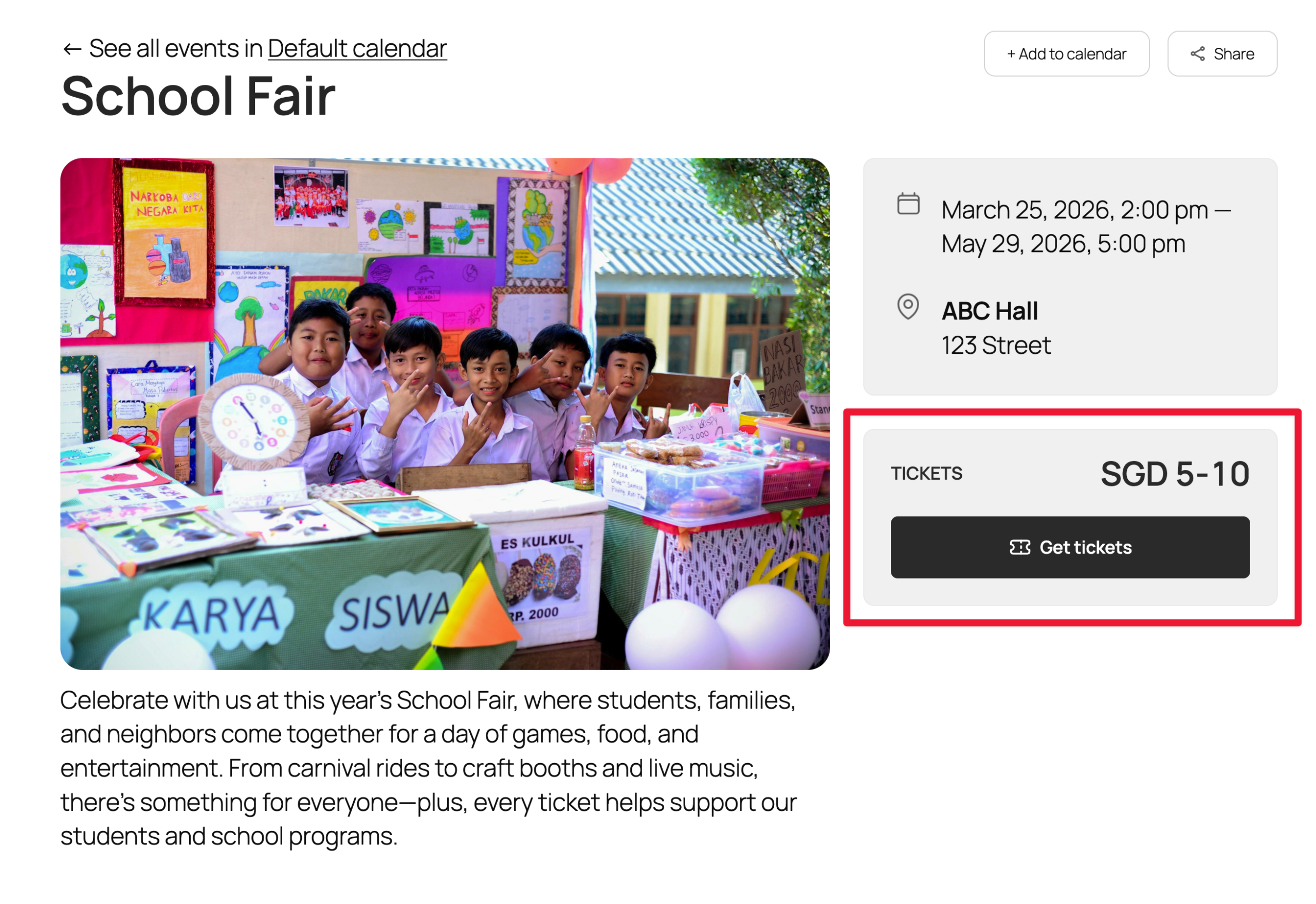
When visiting the event page, attendees will see a tickets box with the price range and a button to Get tickets.
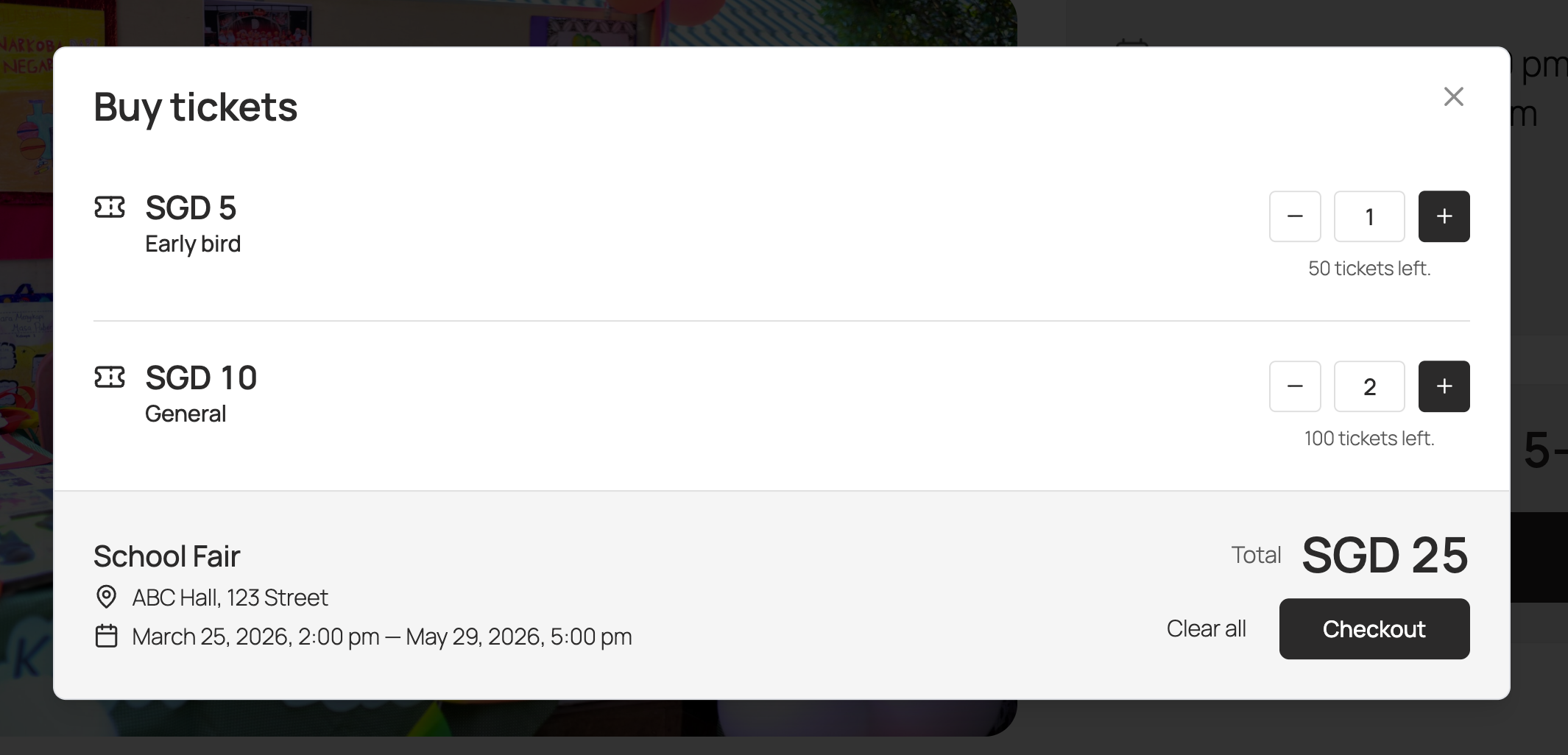
After clicking on Get tickets, they will see the ticket options available, and can select how many tickets they would like to purchase.
From there, they can Checkout.
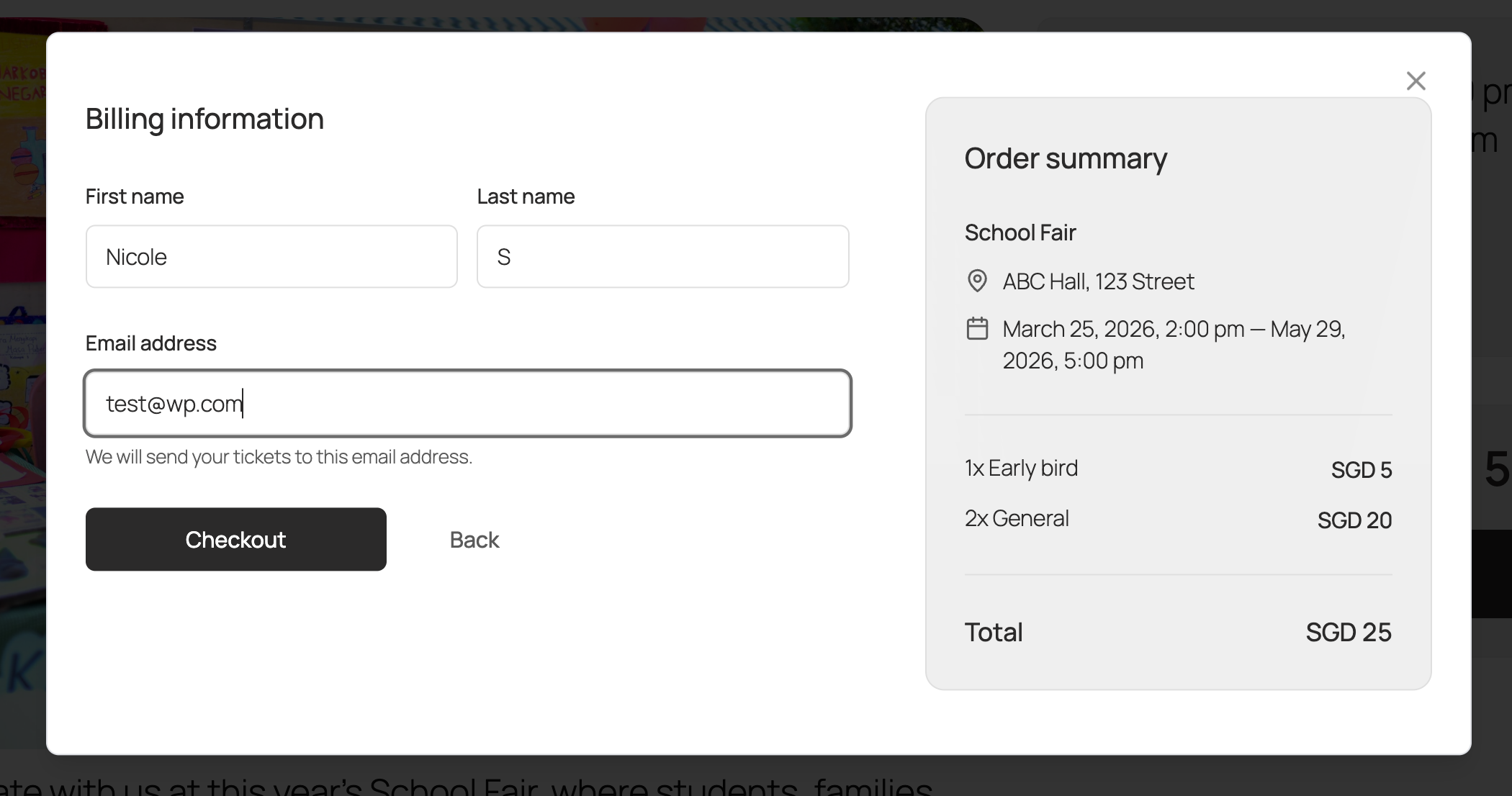
They will then be taken to an Order summary and Billing information page. Their tickets will be sent to the email they add here.
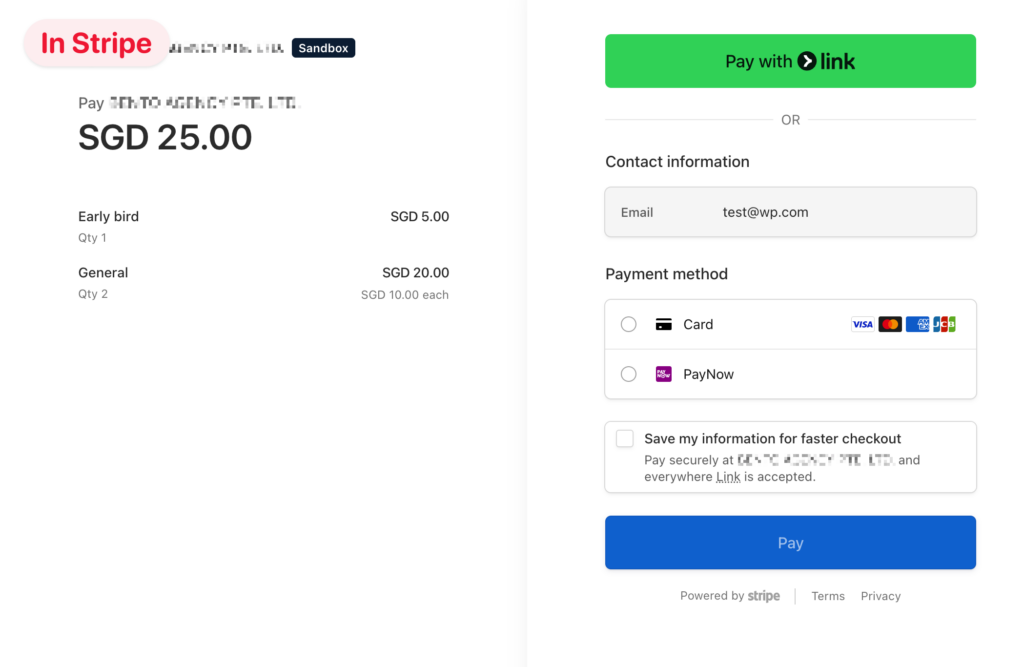
Then, they will be taken to either Stripe or WooCommerce to pay depending on the payments settings.

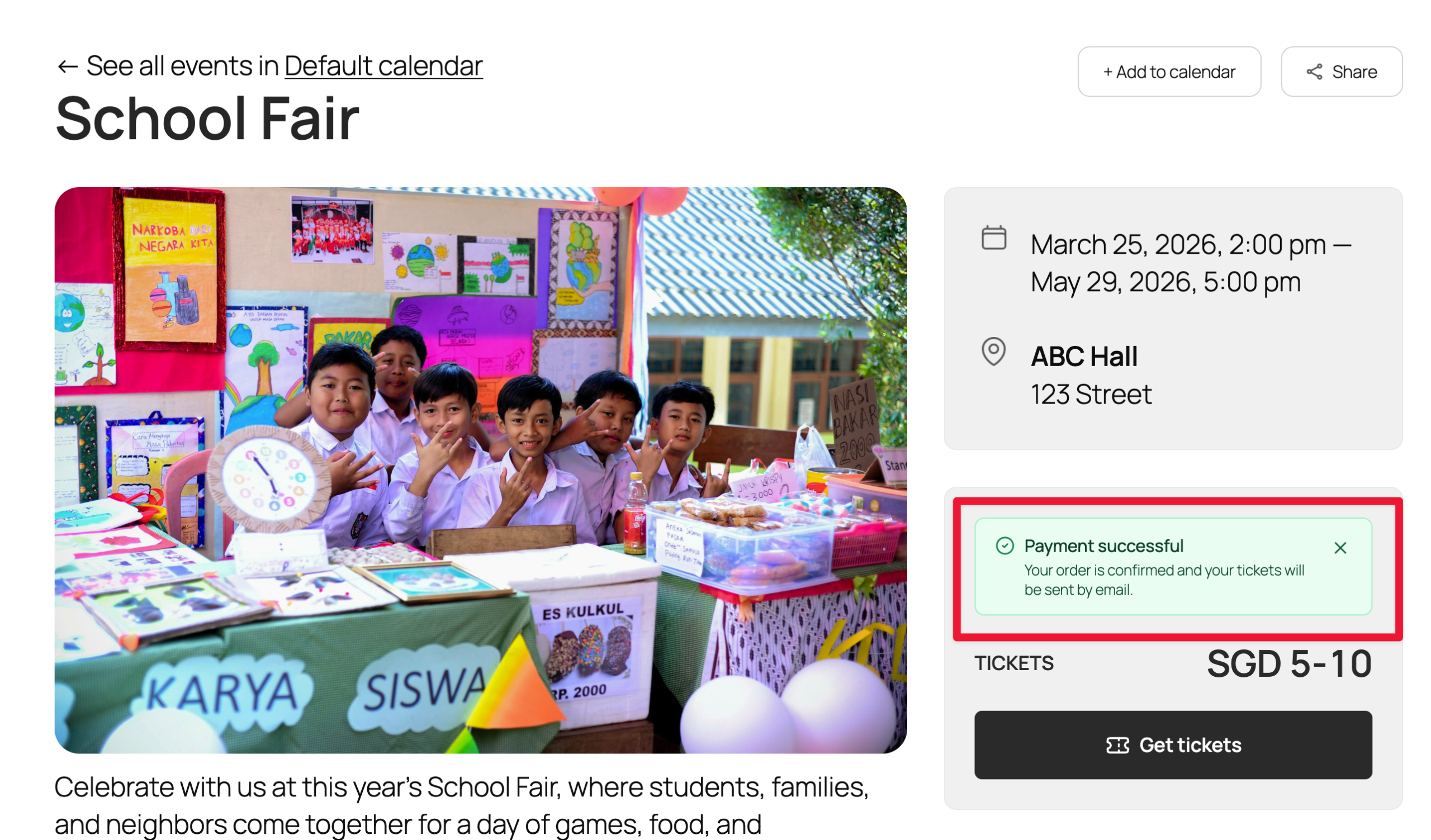
Once the payment has been processed, the attendee will be taken back to the original event page. They will see a notification there informing them that their payment was successful and their tickets have been sent to their email.
2. Receiving tickets via email
This is the email they will receive which includes ticket check-in details:

3. Check-in at event
On the day of the event, the attendee can check-in by showing the QR code in their email to the admin. Or by sharing their check-in code with them.
Admin experience
1. Setting up ticket payments
Before you can sell tickets, you need to configure a payment method. Go to EventKoi > Settings > Payments to get started. EventKoi Pro supports two checkout methods: Stripe (default) and WooCommerce.
Stripe
Stripe is the default checkout method. With Stripe, buyers can pay by credit card, Apple Pay, or Google Pay without leaving your site. No additional plugins are required.
EventKoi Pro supports both test and live Stripe environments, so you can verify everything is working before going live.
To connect Stripe:
- Go to EventKoi > Settings > Payments.
- Under Stripe payments, toggle between Test mode and Live mode depending on whether you’re ready to go live or not.
- Enter your Publishable key and Secret key from your Stripe dashboard (stripe.com > Developers > API keys).
- Click Save. EventKoi will confirm the connection.
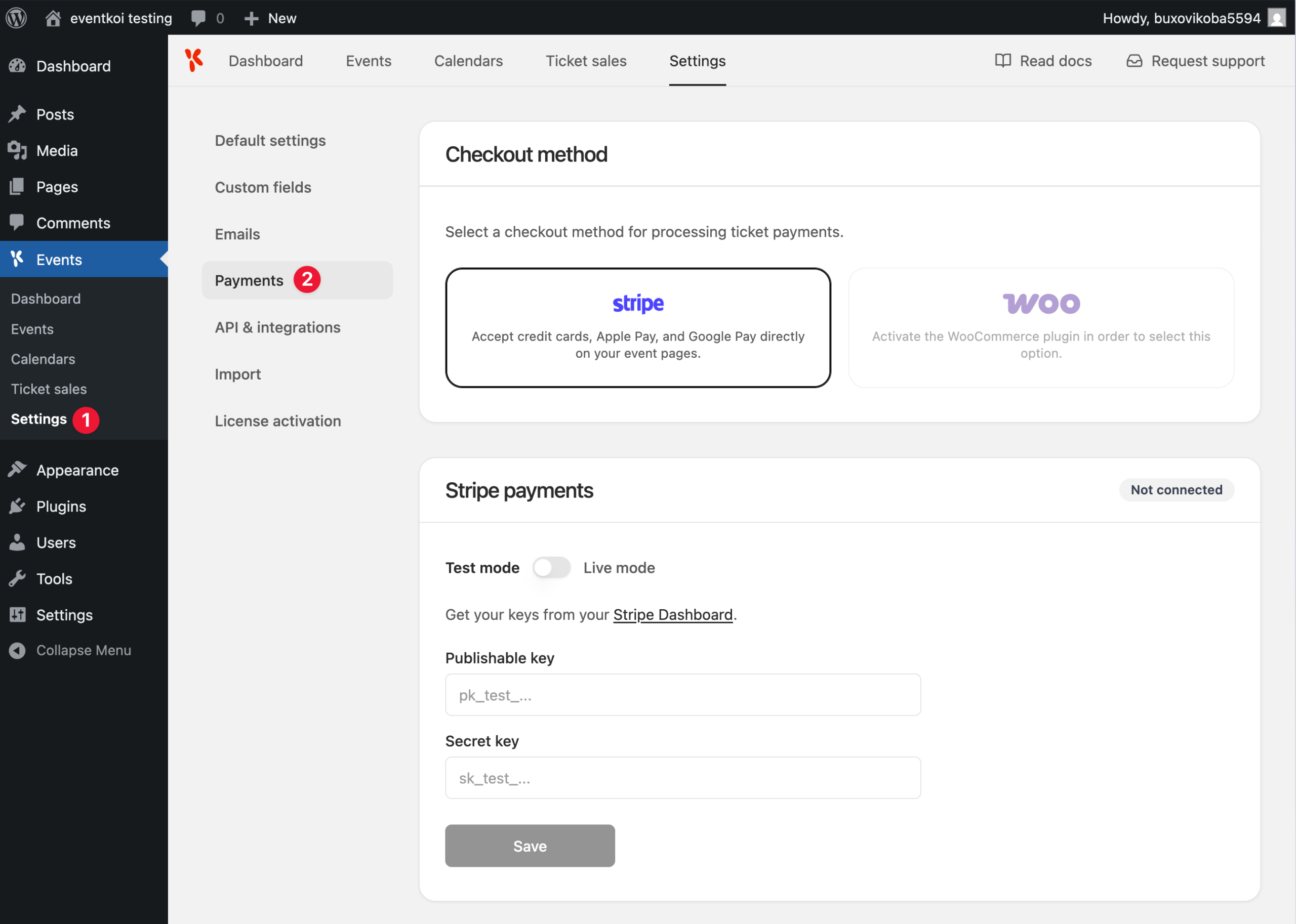
Note: Always test with test mode keys first. Test mode purchases do not charge real cards. Once you’re ready to go live, toggle to Live mode and confirm your live keys are saved.
WooCommerce
If you prefer to process payments through WooCommerce, you can switch to that instead. This lets you use any payment gateway already configured in WooCommerce — PayPal, bank transfer, cash on delivery, and others.
To switch to WooCommerce:
- Go to EventKoi > Settings > Payments.
- Under Checkout method, select Any WooCommerce gateway.
- Save your settings. When using WooCommerce, options, such as currency, are inherited from your WooCommerce store settings.
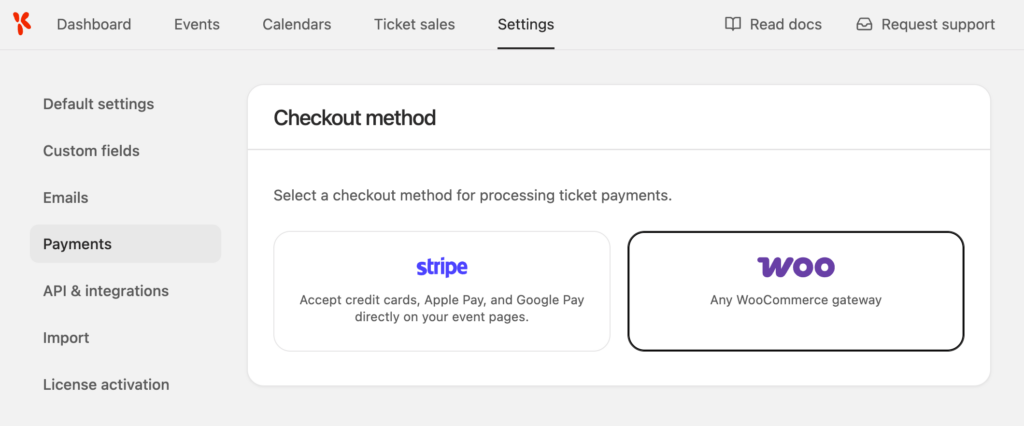
Notes: You can switch between Stripe and WooCommerce at any time. Existing orders are not affected.
2. Setting up tickets for an event
Tickets are created inside an event. You cannot create a ticket independently from an event. Each event can have one or more ticket types — for example, “Early bird” and “General admission”.
Adding ticket types
In your WordPress admin, go to Events, then click on Add event.
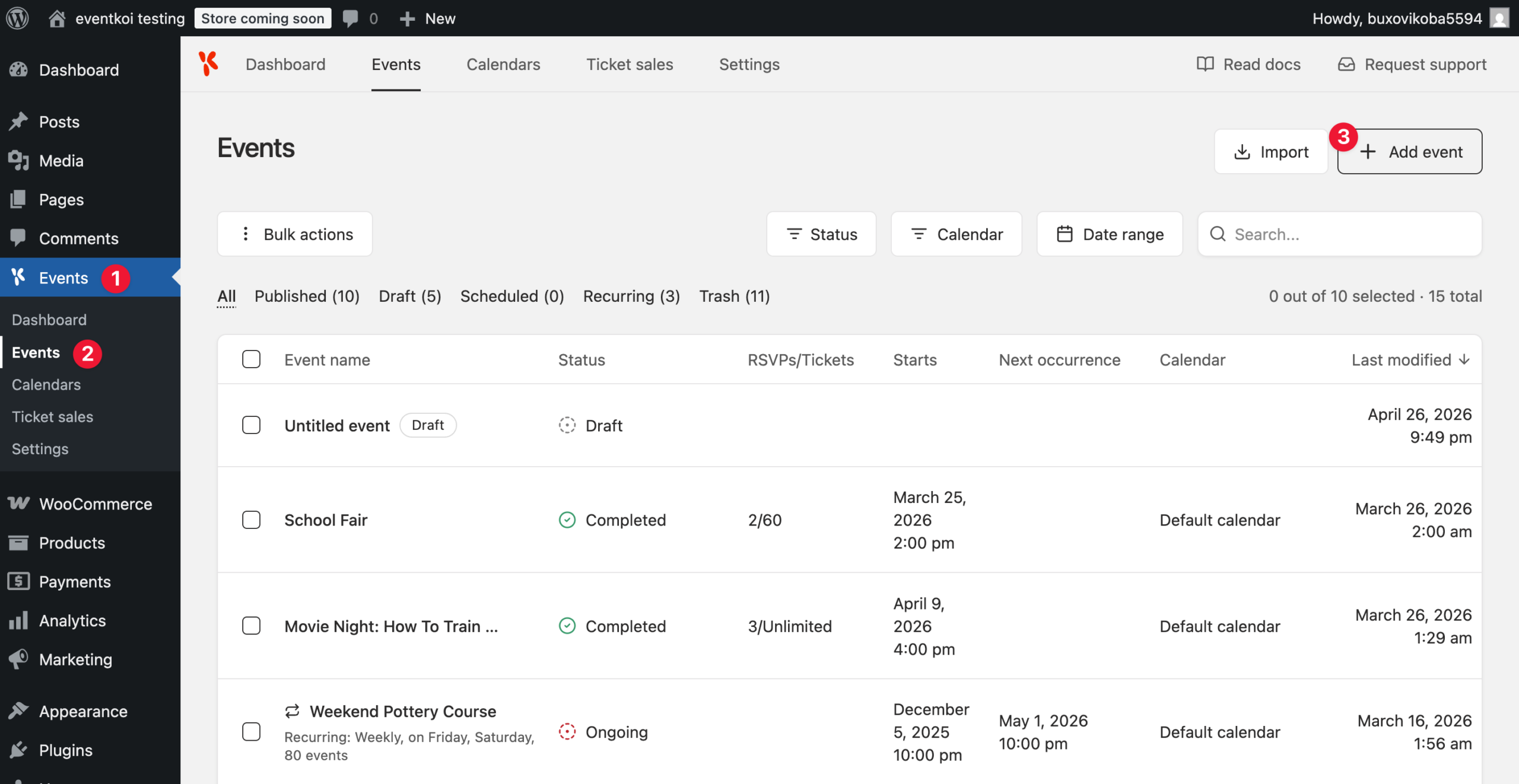
Add in your event details (name, date and time, etc). Then scroll to Attendance. There, select Tickets.
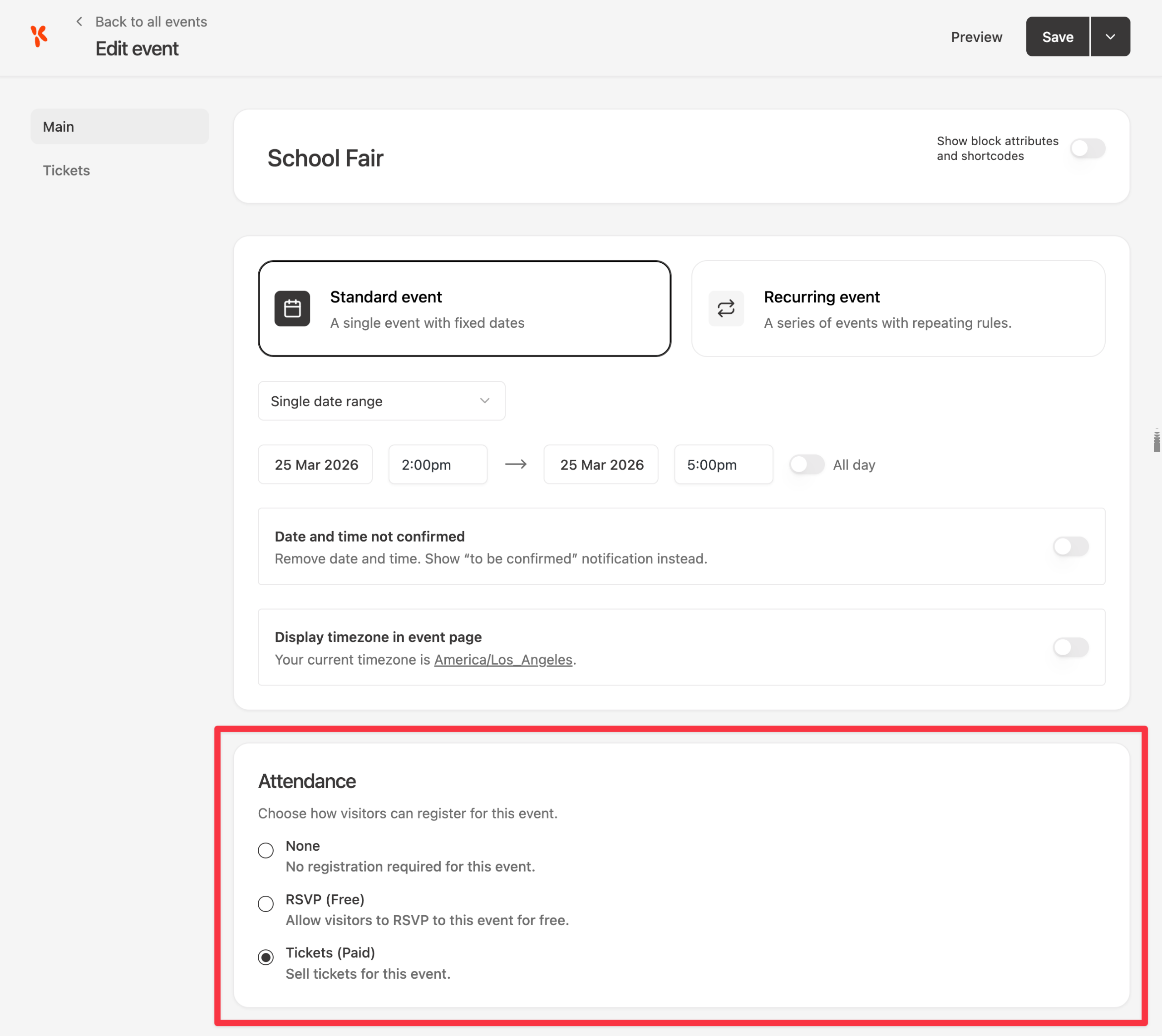
When you select Tickets, you’ll see a new tab, Tickets, appear on the left side menu. Click on it to create a ticket.
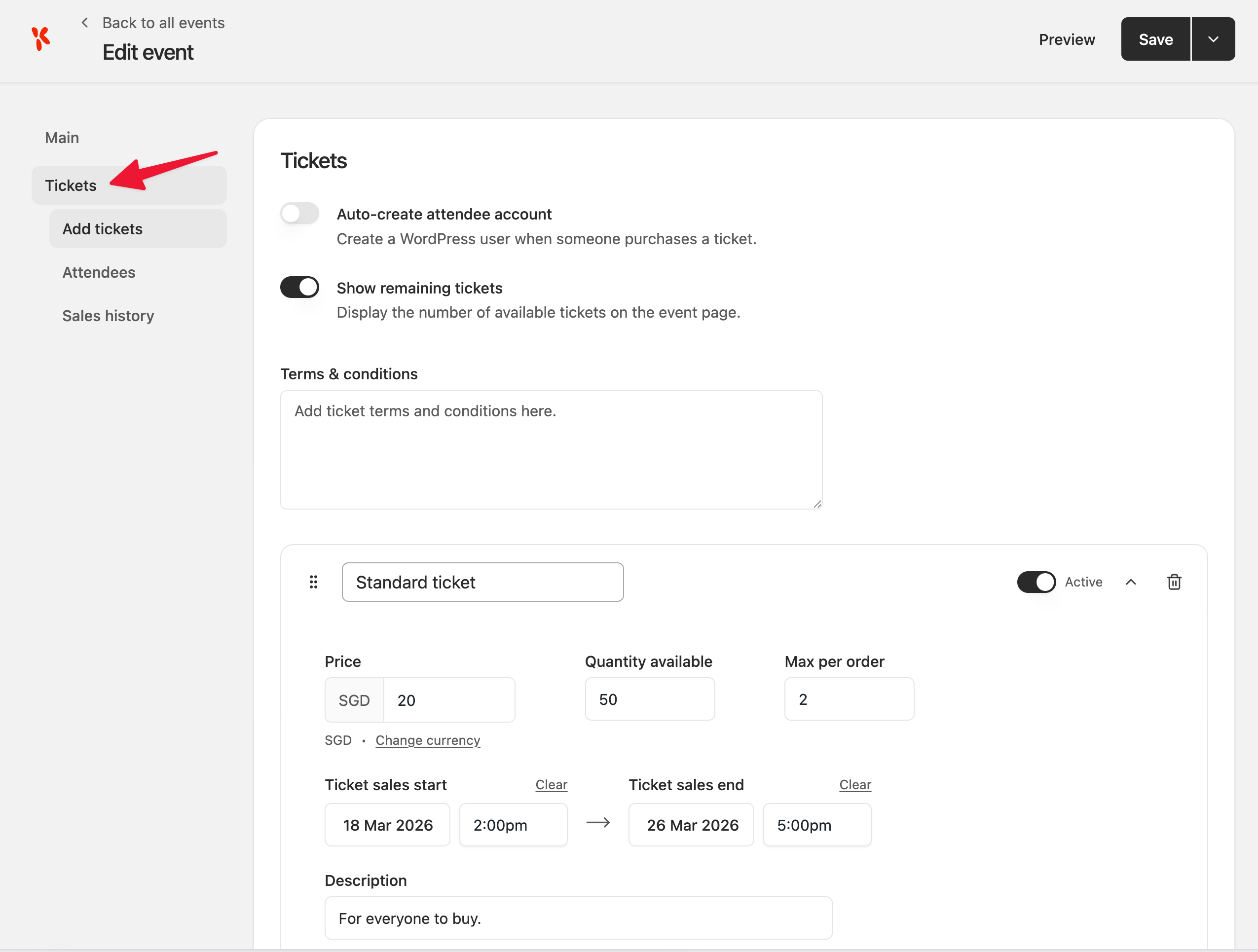
Ticket settings available:
- Option to create an attendee account in WordPress
- Option to show remaining tickets on the event page
- Add terms & conditions for all tickets, or for individual tickets
- Ticket name, price and quantity
- Maximum number of tickets per order
- Ticket sales start and end date. If left blank, sales will start when the event starts, and sales end when the event ends.
- Ticket description
- You can make a ticket active or inactive, delete the ticket, and create multiple tickets per event.
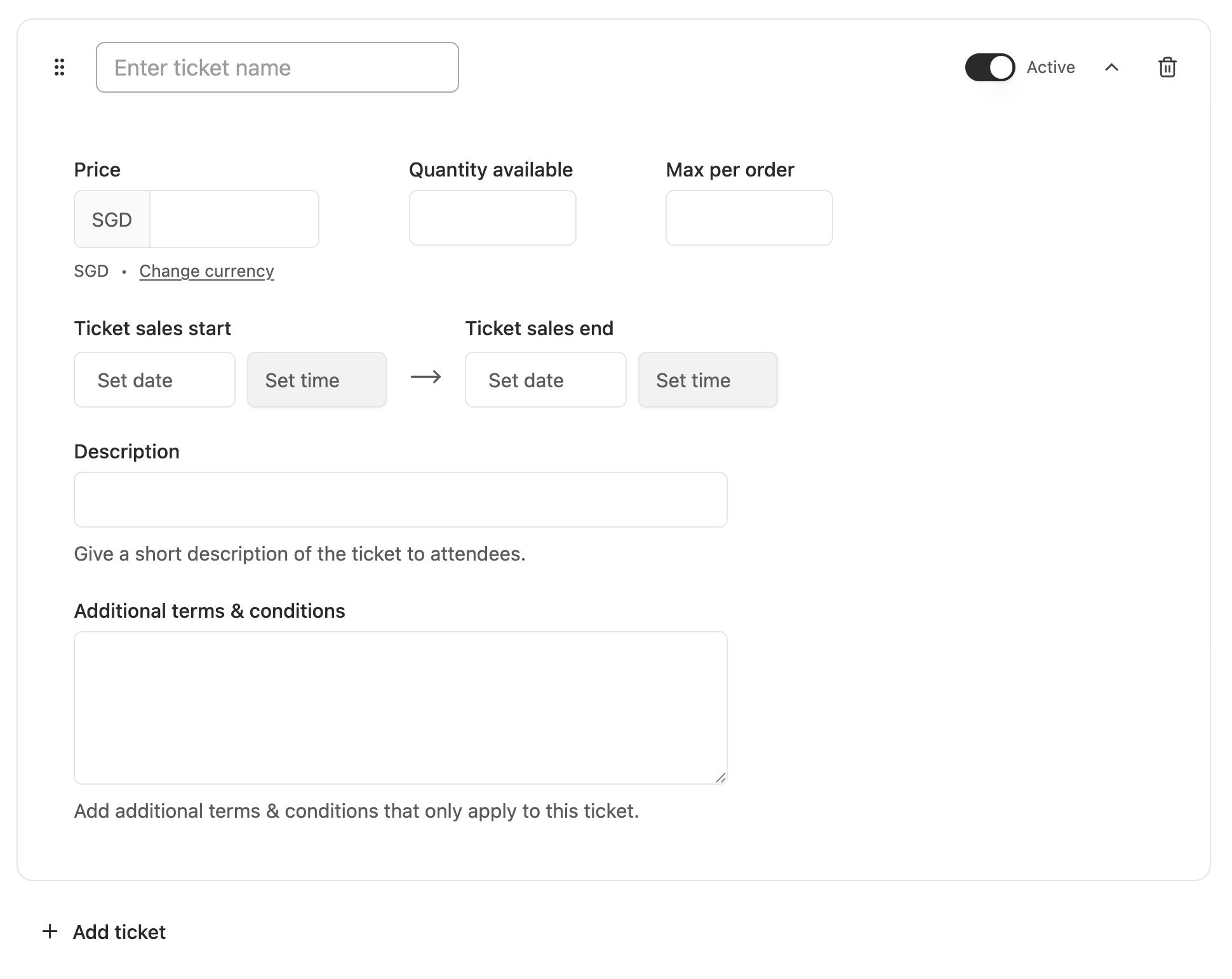
Free tickets
Free tickets follow the same checkout flow, but no payment details are collected. The order is processed at $0 and the buyer receives a confirmation email with their check-in code.
When attendees click on Get tickets, they will see a pop-up that allows them to select how many tickets they want to purchase. When they are ready, they click on Checkout.
3. Managing orders
Viewing attendees for a specific event
The Attendees tab in the event editor gives you a combined view of everyone registered for the event.
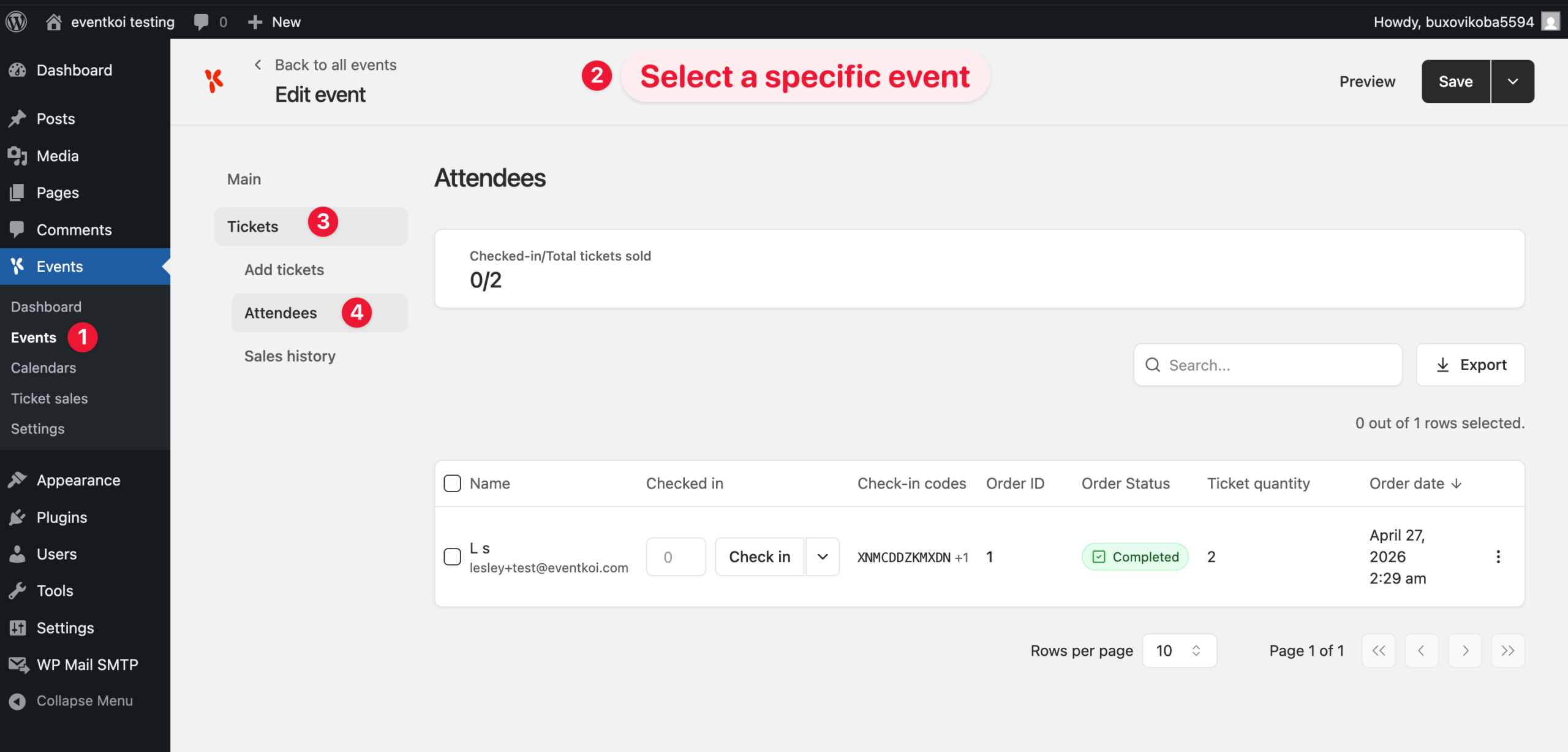
Here you’re able to see:
- Attendee name and email
- Check-in status
- Check-in code
- Order ID
- Order status
- Ticket quantity
- Order date
- You can also resend a confirmation email or archive an order
Viewing ticket sales history for a specific event
For a full order list for a single event, you can view the Sales history tab, which is directly beneath Attendees.
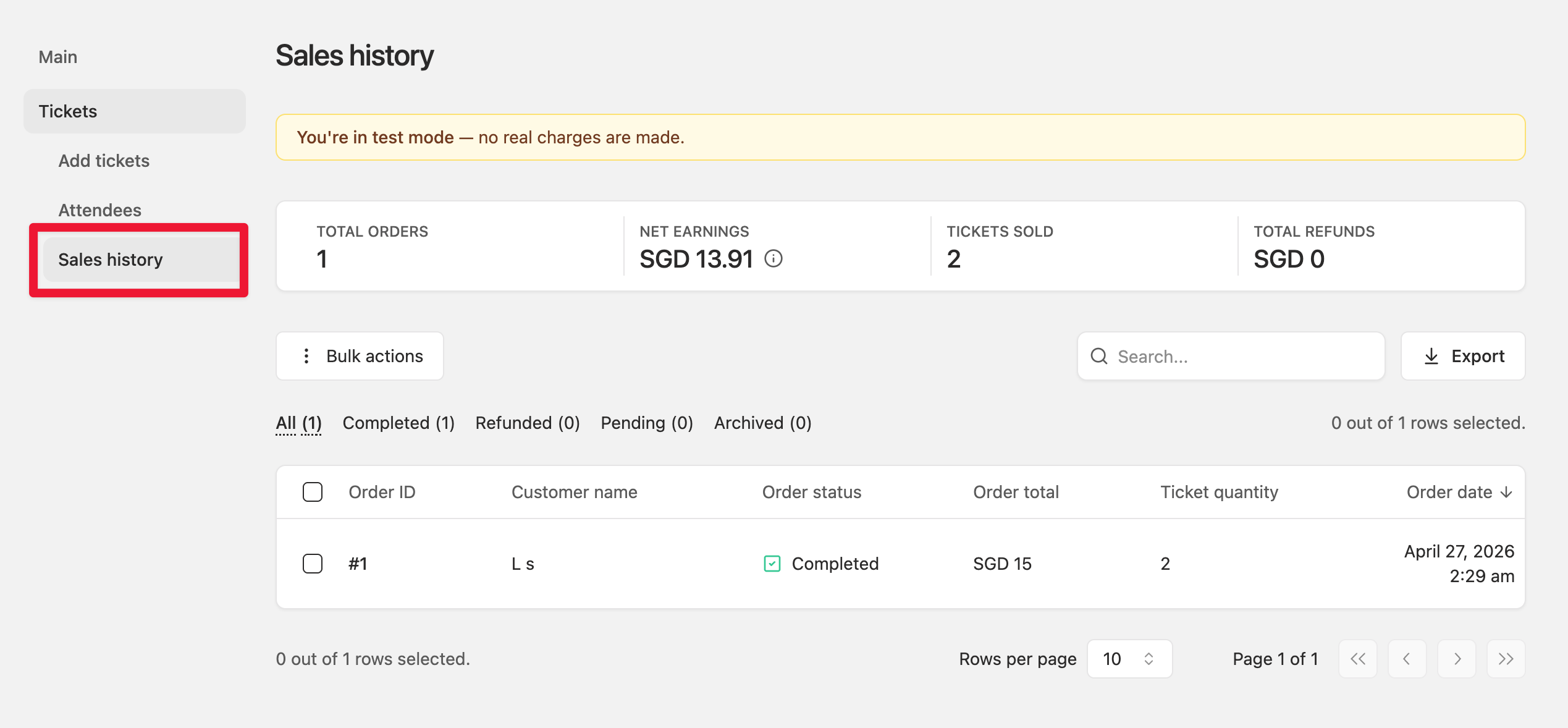
Viewing and managing a specific order
To view and manage a specific order, click on the Order ID.
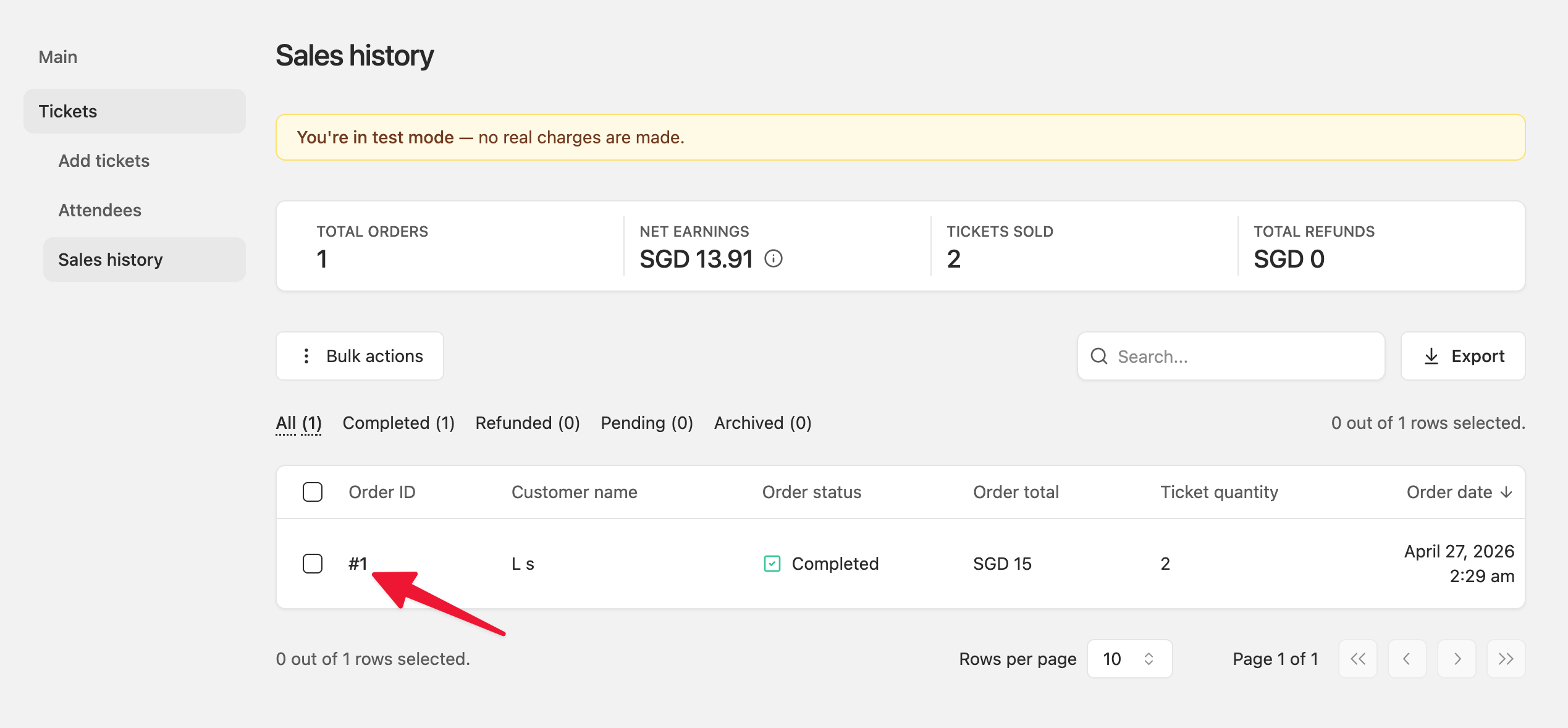
If you are using WooCommerce to manage payments, you’ll be taken to the order details inside of WooCommerce.
If you are using Stripe to manage payments, you’ll see the following order details page:
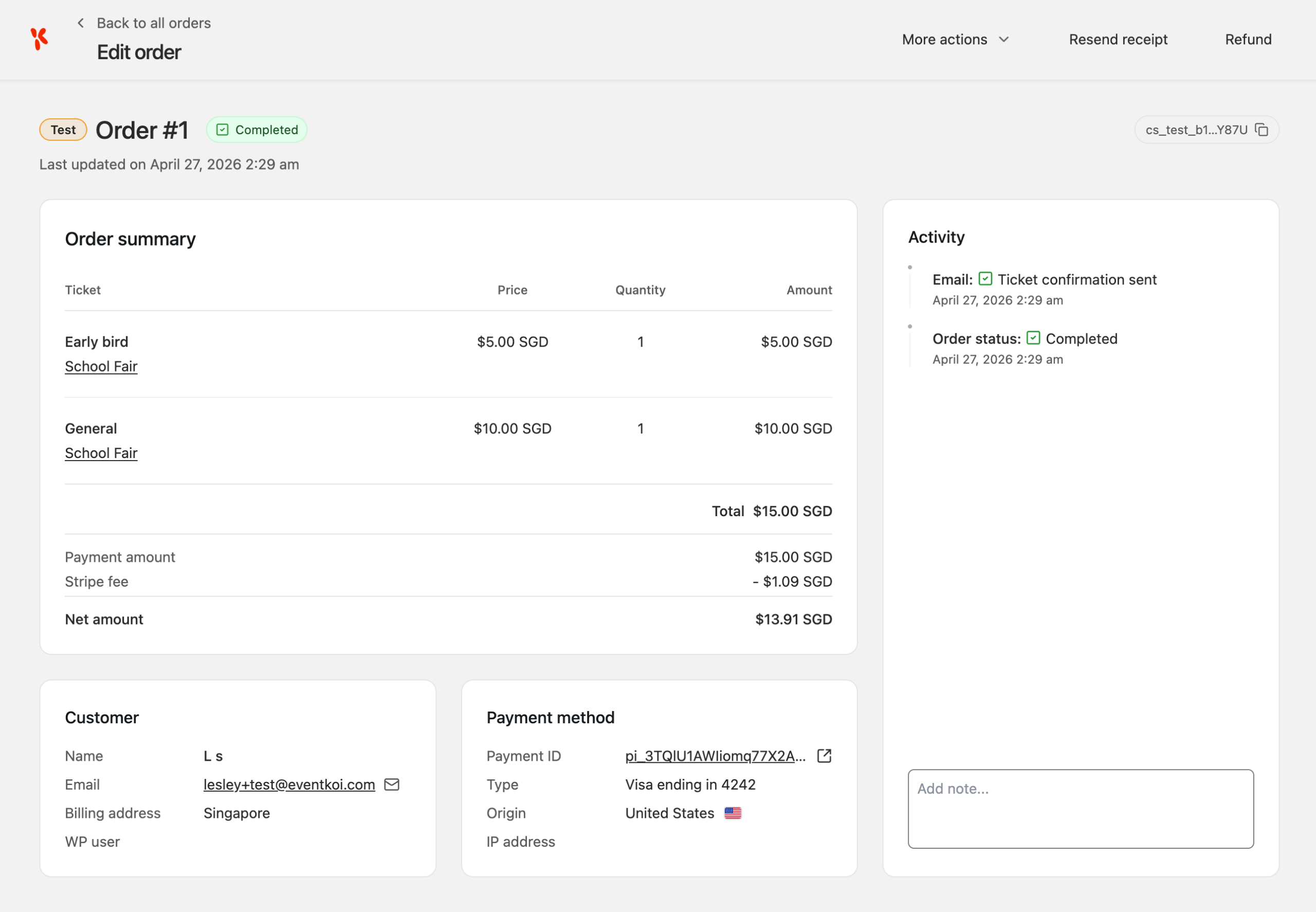
Here you’ll see the following:
- Order summary
- Customer. details
- Payment method
- Payment activity log
You can also perform the following actions:
- Add notes to the order.
- Resend receipt
- Refund
- Archive (click on More actions > Archive)
For refunds, you’ll be taken to a subpage to process refunds.
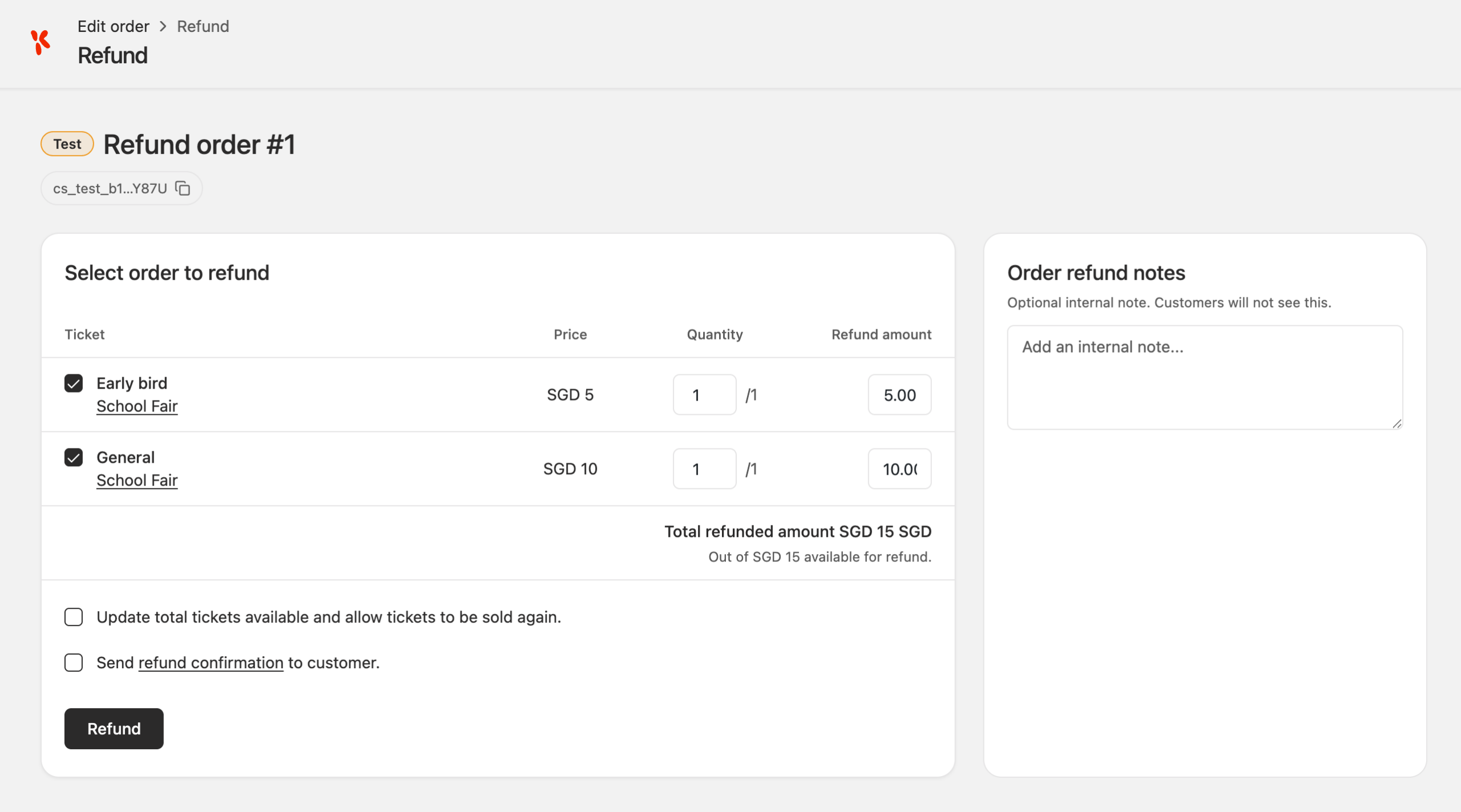
Here you can perform the following actions:
- Add a refund note
- Select order, quantity and amount to refund
- Update ticket totals
- Send refund confirmation email to customer
Viewing all orders across all events
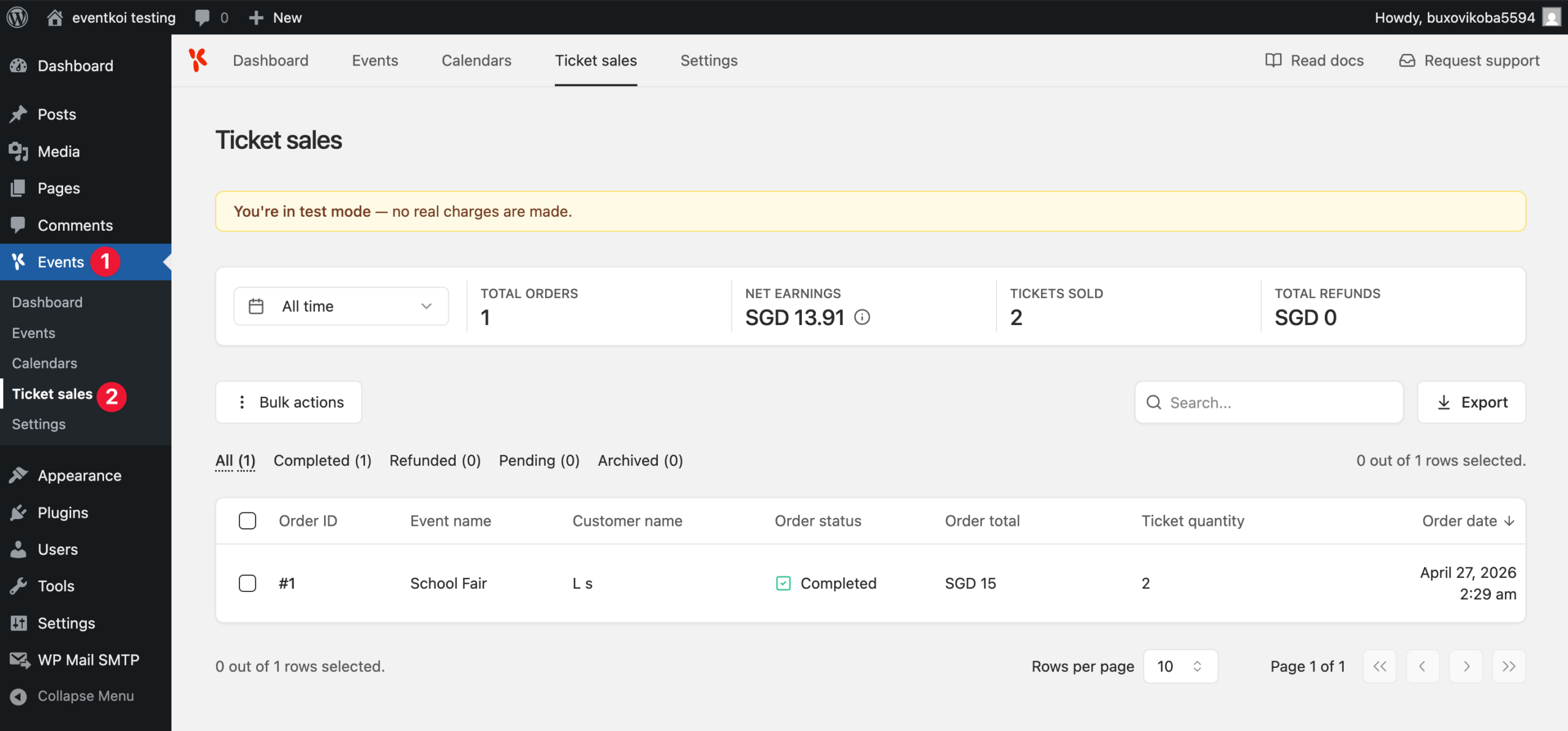
To see ticket sales across all events, head to Events > Ticket sales.
4. Checking in attendees
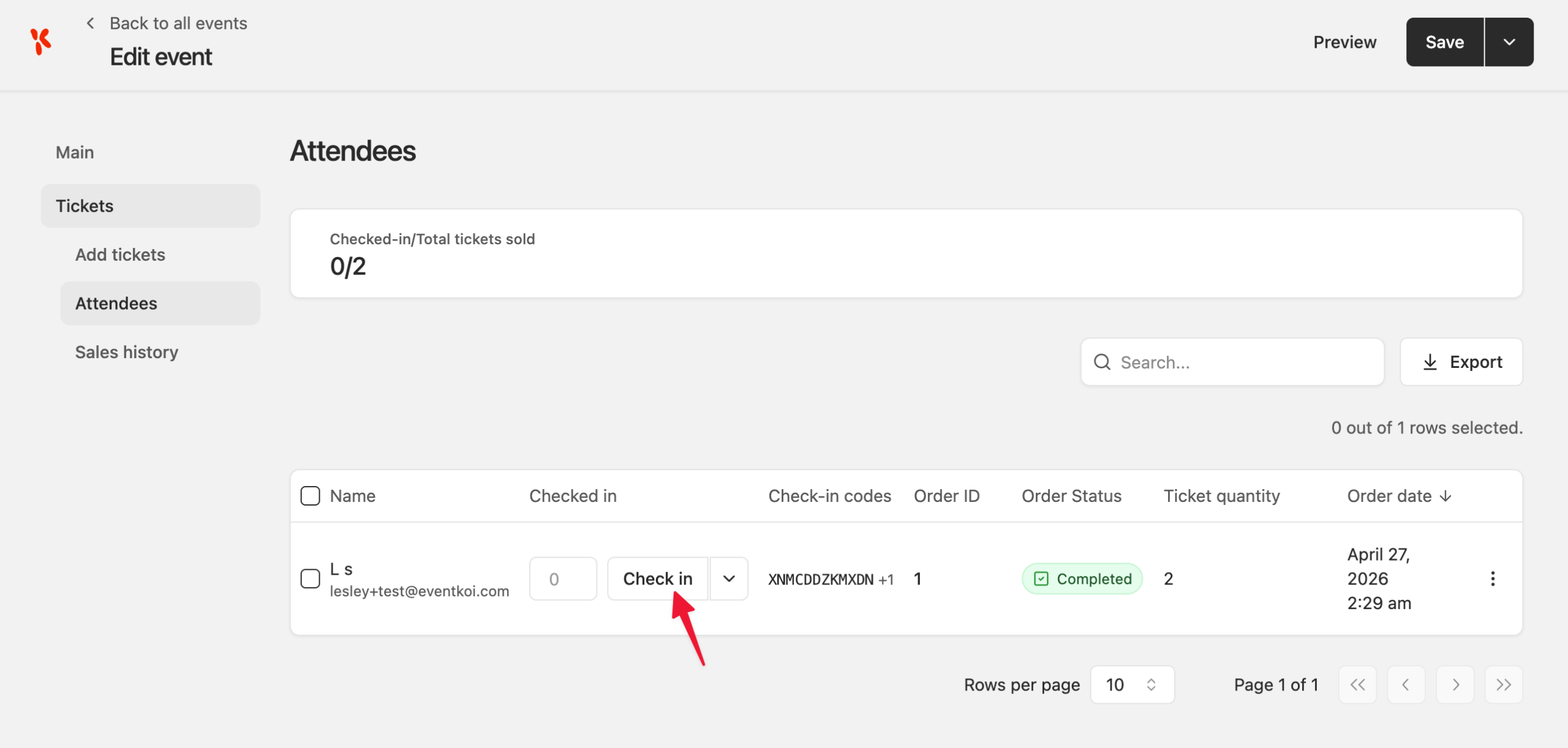
Check-in is managed from the Attendees tab.
Manual check-in
To manually check-in an attendee, click the Check-in button. You can select the number of people to check-in. This is useful if an order has multiple tickets, but not everyone has arrived yet.
QR code check-in
Each ticket order includes a QR code that can be scanned to check attendees in at the door.
The QR code redirects to a page on your site which displays a check-in confirmation page, showing the attendee’s name and ticket details, and automatically marks the ticket as checked in.
If a ticket has already been checked in, the overlay will indicate this to prevent duplicate check-ins. If the code is invalid, an error is shown.
5. Email notifications
EventKoi Pro sends automated emails for key activities. All email templates are fully customisable. To manage email settings, go to Events > Settings > Emails.
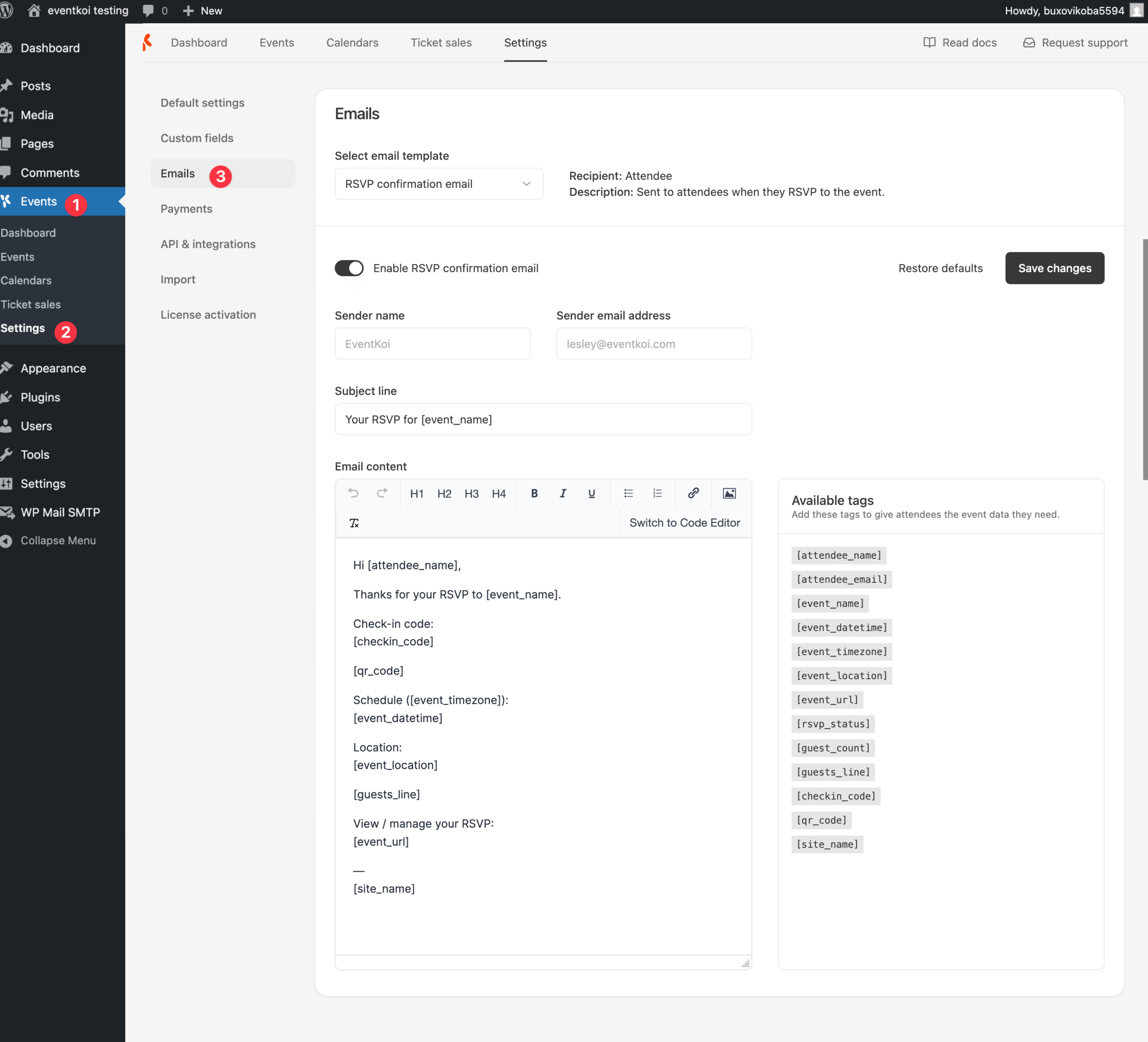
There are two types of emails sent: User emails (sent to event attendees) and Admin notifications (sent to you). Select a template from the dropdown to edit it.
The following emails are available:
User emails:
- RSVP confirmation email
- Ticket confirmation email
- Refund confirmation email
Admin notification emails:
- New RSVP notification
- New ticket sale notification
For each template you can set:
- Enabled: toggle the email on or off.
- Sender name: the name the email is sent from.
- Sender email address: the address the email is sent from.
- Subject line: the email subject.
- Email content: the full email body, edited using a rich text editor.
- Restore defaults: If you edited your email and are not happy with it, you can reset any template back to its original EventKoi default content.
6. Unsuccessful purchases and checkout sessions
What happens when an order doesn’t go through? When does the ticket become available again?
Tickets are held the moment the purchaser clicks the Checkout button. So if there is 1 ticket left, and someone clicks the Checkout button, the event will reflect that there are no tickets left.

If the purchaser then completes the checkout process, but the payment failed, the ticket will be immediately released and available to purchase again.
Each checkout session lasts for 30 minutes beginning from when the purchaser clicks the Checkout button. After 30 minutes, if they do not complete the checkout process for any reason, the tickets will be released and available to purchase again.
Frequently asked questions
Do I need WooCommerce to sell tickets? No. EventKoi Pro includes native Stripe integration and you can accept payments without WooCommerce. WooCommerce is available as an alternative if you prefer it or already have it configured.
Can I test my ticket setup without charging real cards? Yes. Enter your Stripe test keys in Settings > Payments and toggle to Test mode. All purchases made in test mode use Stripe’s test card numbers and do not charge real payment methods.
What happens to ticket availability when an event is updated? Updating event details (title, date, description, etc.) does not affect ticket availability or existing orders. To stop selling tickets, deactivate individual ticket types or mark the event as completed or cancelled.
Can buyers purchase tickets if they already have a WordPress account? Yes. If a logged-in user purchases tickets, their WordPress user ID is recorded against the order. If Auto-create attendee account is enabled, new accounts are only created for buyers who are not already logged in.
What’s the difference between EventKoi Pro and EventKoi Lite tickets? EventKoi Lite is limited to WooCommerce payment gateway, it does not have a Stripe integration. In addition, you cannot edit emails in EventKoi Lite, only the subject and sender details.